Tree Removal
Planned removal for dead, damaged, declining, oversized or poorly located trees.
Learn more →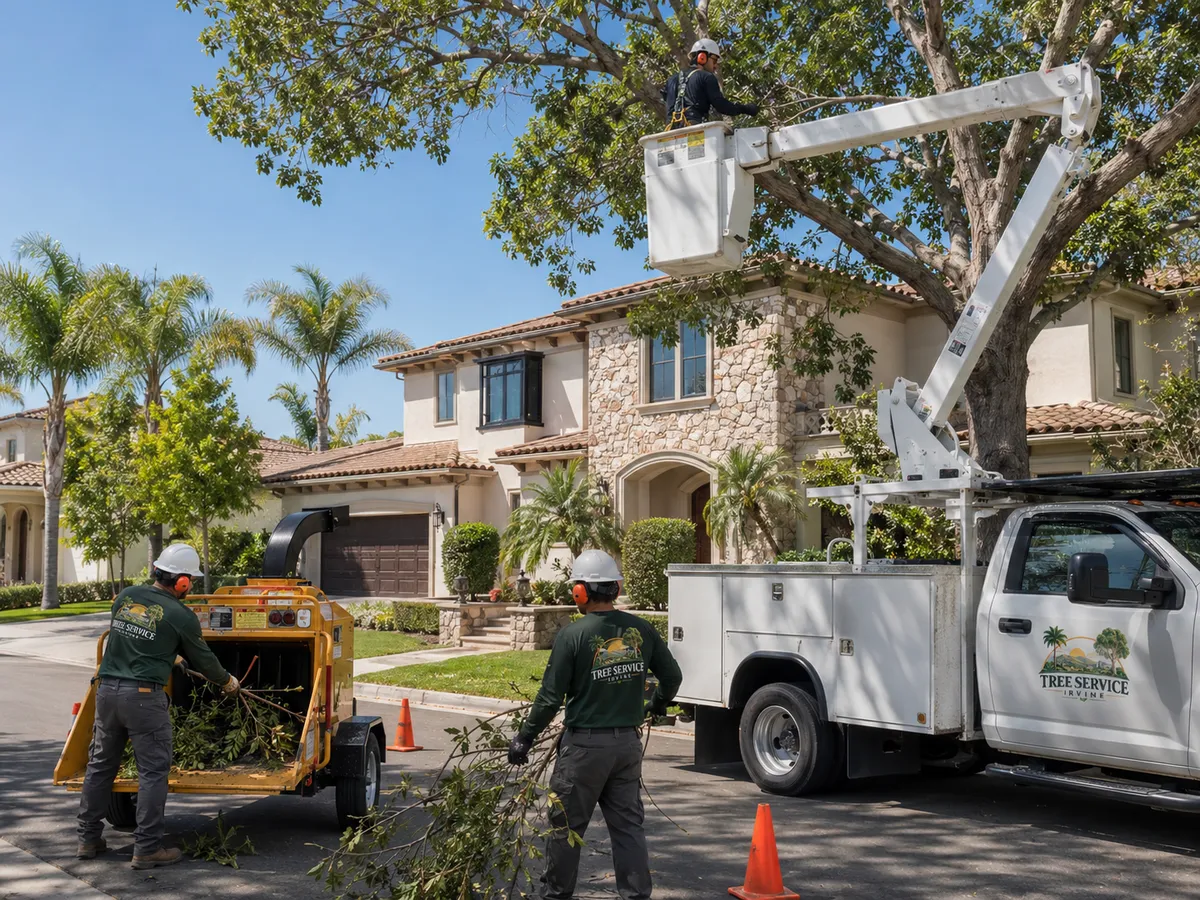
Tree care for homes, HOAs and commercial properties
Request an estimate for tree removal, trimming, emergency work, palms or eucalyptus. Clear information, practical next steps and local Orange County coverage.
Local tree care
Tree Service Irvine helps homeowners, landlords, property managers, HOAs and local businesses arrange estimates for tree work across Irvine and nearby Orange County communities. Common needs include trees that have become too large for their setting, branches growing close to roofs or driveways, storm damage, tall palms, mature eucalyptus, and declining trees that may need removal.
Good tree care starts with the property as well as the tree. A mature canopy beside a tiled roof requires a different approach from an open front-yard tree. A palm beside a pool creates different access and debris-handling issues from a eucalyptus on a larger hillside lot. Walls, narrow side yards, parking areas, irrigation, planted beds, neighboring property and overhead obstacles can all change what equipment and work sequence make sense.
Tell us what you can see, where the tree stands and what concerns you. A site-specific estimate can then take account of tree size, access, condition, species and the space around the tree.
60-second overview
Take a quick look at our tree removal, trimming, palm and emergency tree services across Irvine and Orange County.
Core services
Our core services cover the tree work Irvine and Orange County property owners most often need, from routine trimming and palm maintenance to difficult removals and emergency damage.
Planned removal for dead, damaged, declining, oversized or poorly located trees.
Learn more →Selective trimming and pruning for clearance, deadwood, structure and manageable growth.
Learn more →Help arranging urgent assessment and removal for fallen limbs and damaged trees.
Learn more →Controlled removal for tall, unwanted, declining or difficult-to-maintain palms.
Learn more →Maintenance for dead fronds, dry skirts, fruit clusters and practical clearance.
Learn more →Careful planning for large, damaged, declining or poorly placed eucalyptus trees.
Learn more →Irvine property context
Irvine contains a wide range of planned residential communities, townhomes, apartments, HOA-managed common areas, business parks and established single-family neighborhoods. Trees are often integrated closely with buildings, sidewalks, parking areas, walls and mature landscaping. That can make access and property protection as important as the cut itself. Older Irvine neighborhoods can have broad mature canopies extending over roofs and driveways, while newer developments and commercial sites often place trees in tighter planting areas beside sidewalks, parking and maintained common space. The same trimming or removal service can therefore require a very different access, equipment and debris-handling plan from one property to the next.
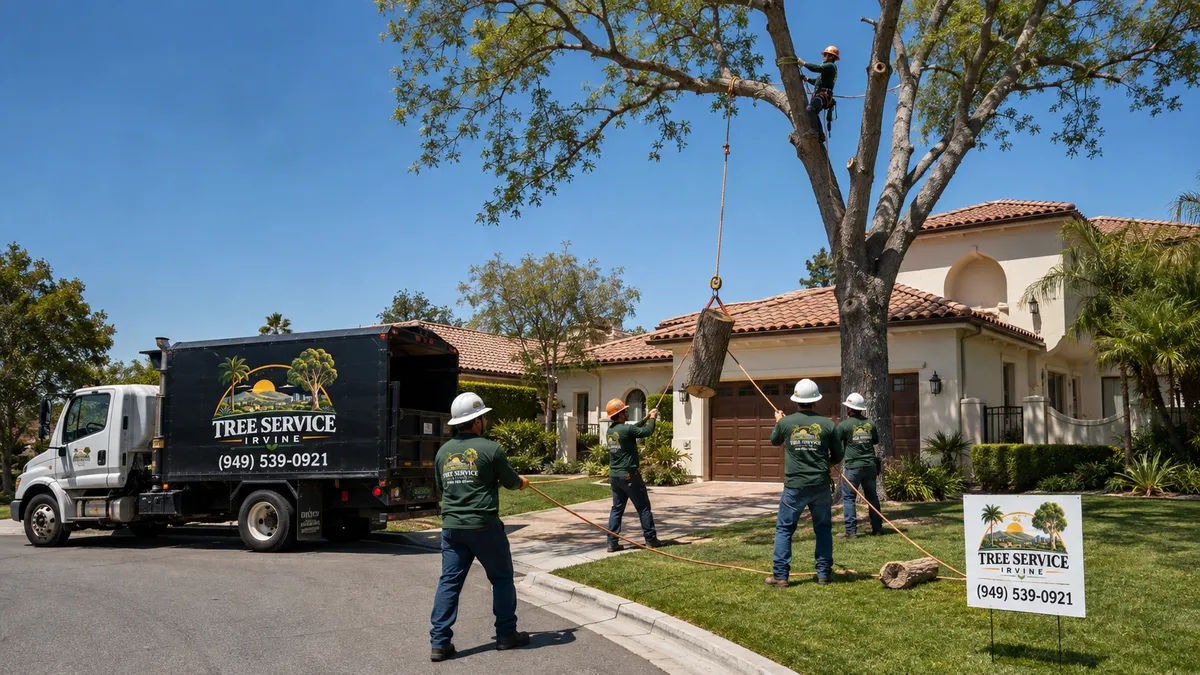
Routine tree trimming and pruning may be needed to create sensible clearance from roofs, walkways, driveways, lighting or neighboring property. Larger trees may need selective reduction rather than indiscriminate topping. When a tree is dead, severely damaged, badly placed or no longer practical to retain, removal can require sectional dismantling so branches and trunk pieces stay controlled.
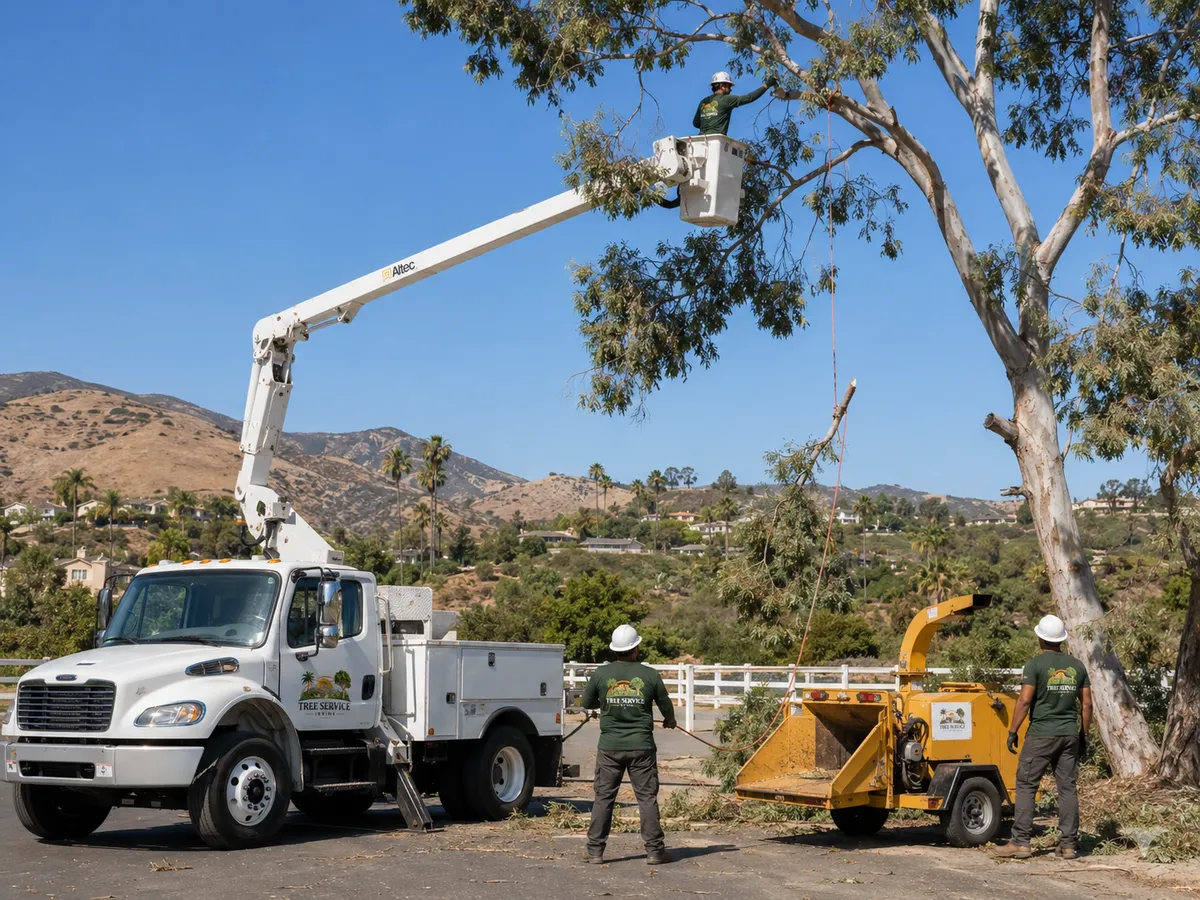
Palms bring their own maintenance issues. Dead fronds, dry skirts, flowers and fruit can build up around the crown, while a tall palm that has outgrown a small yard may eventually be more practical to remove. Eucalyptus can also become substantial trees, with long limbs and heavy wood that make space, access and nearby structures especially relevant.
Common reasons to call
Long limbs rubbing a roof, blocking access, crowding gutters or extending into neighboring space may justify selective trimming rather than heavy canopy removal.
Visible deadwood, storm breakage or a partially failed branch can create an obvious reason to have the tree assessed before more material comes down.
Some trees simply become too large for a narrow yard, courtyard or planting strip. The realistic options may include reduction, ongoing maintenance or removal.
A new lean, exposed root plate, trunk damage or sudden canopy change deserves attention. Avoid standing beneath a visibly unstable tree while arranging advice.
Tall palms can produce heavy dry fronds and repeated seasonal debris. Trimming may manage the issue; removal may make more sense when the palm no longer fits the site.
Remodeling, access changes, new hardscape or a landscape redesign can leave an existing tree in conflict with the future use of the property.
Removal versus trimming
Not every tree problem calls for removal. Healthy trees often benefit from proportionate maintenance, especially where the issue is clearance, dead branches, an overextended limb or a crowded section of canopy. Tree trimming can often solve a practical conflict while preserving useful shade and structure.
Removal becomes more relevant when the tree is dead, badly damaged, repeatedly failing, unsuitable for the available space, interfering with planned work or presenting a problem that cannot reasonably be managed through pruning. The decision should be based on the individual tree and property rather than a generic rule.
For a formal diagnosis, tree-risk assessment or specialist opinion, ask whether a qualified arborist is appropriate for the situation. Complicated condition or risk questions deserve the right level of expertise.
How the job is shaped
Height, trunk diameter, canopy spread, lean and branch distribution all affect the amount of work and the size of material that must be controlled.
Dead, split, storm-damaged or partially uprooted trees can behave differently from healthy trees and may require a more cautious sequence.
Gate width, side yards, slopes, parking, street position and the ability to place a bucket truck or chipper can change the practical method.
Roofs, patios, pools, walls, fences, vehicles, solar panels and established planting can reduce the available landing zone.
A large canopy or heavy trunk produces substantial material. The route from the tree to a chipper or loading area is part of the work.
Emergency work after a failure can involve unstable material, blocked access and changing conditions, so the scope may differ from planned maintenance.
For these reasons, a quotation based on photographs alone can be useful for initial screening but may not replace seeing a complex tree and its surroundings.
A controlled process
The exact method belongs to the tree-service professional handling the job, but property owners should expect the work scope to be understandable. A useful estimate explains what is being cut or removed, how the surrounding property affects the job, what cleanup is included and any limitations that could change the price.
For trimming, it should also be clear what the pruning is intended to accomplish. Heavy topping or stripping a canopy simply to make a tree “smaller” is not the same as targeted pruning for clearance, deadwood, structure or reduction.
Orange County coverage
Irvine is the primary location. The wider service area includes nearby communities where property type, terrain and tree mix can vary considerably.
Different properties, different priorities
Residential work often revolves around roofs, patios, pools, fences, gardens and narrow side access. A smaller tree in a confined backyard can be more complicated than a larger tree with open working space. Photos of gates, access routes and the area below the canopy can help explain the job before an on-site visit.
Common areas add pedestrian routes, parked vehicles, irrigation, lighting and maintained planting to the work zone. Clear scope matters: which trees are included, what clearance is required, how debris will move and which areas need to remain accessible while work is underway.
Business parks, offices and managed sites may need work planned around parking, deliveries, customers and normal operating hours. Tree maintenance can focus on safe access, clearance and orderly appearance, while larger removal projects may need a more defined work zone and debris route.
Questions before you book
Removal may make sense when a tree is dead, severely damaged, repeatedly failing, badly located or no longer practical for the space. Trimming is often more appropriate when the issue is dead branches, roof clearance, overgrowth or specific limb conflicts. A site-specific assessment is the best way to decide.
Yes, selective clearance pruning is a common reason for tree work. The amount removed should be proportionate to the tree's structure and the clearance actually needed rather than simply cutting back the whole canopy.
Yes. Emergency tree-service requests can include fallen limbs, partial failures and damaged trees. If power lines or another public utility are involved, contact the relevant utility or emergency authority first and keep clear of the area.
Palm services include trimming for dead fronds, dry skirts, fruit and routine maintenance, as well as complete removal when a palm is declining, unwanted or too difficult for its location.
Yes, eucalyptus removal is one of the featured services. Large specimens can require detailed planning because of height, heavy wood, long limbs, access and the proximity of structures or neighboring property.
Tree-service pricing varies with tree size, species, condition, access, equipment requirements, nearby structures, debris volume and the exact scope. Request a site-specific estimate for the most useful indication of cost.
Irvine is the primary location, with service across Tustin, North Tustin, Tustin Ranch, Orange Park Acres, Villa Park, Anaheim Hills, Yorba Linda, Newport Beach, Costa Mesa, Lake Forest, Laguna Hills and Mission Viejo.
Describe the tree, where it stands and what concerns you. Request an estimate before spending time guessing at the right solution.
Request a Free Estimate (949) 539-0921